
Is Red Light Therapy Worth It? A Plain Guide to LED Masks at Home ⭐
Red Light Therapy at Home: What It Does, What It Doesn't, and Who It's For
Have you wondered whether red light therapy is worth the money, or just a passing beauty trend?
If I weren't in the beauty business, I would be skeptical, because red light therapy makes BIG claims that seem too good to be true.
But since I AM in the beauty business, I've had the privilege of trying several LED light therapy devices, so I have a bit of experience with them and am ready to spill the tea about whether or not they are actually helpful!
By the end of this post, I hope you have enough information to decide if red light therapy is right for you.
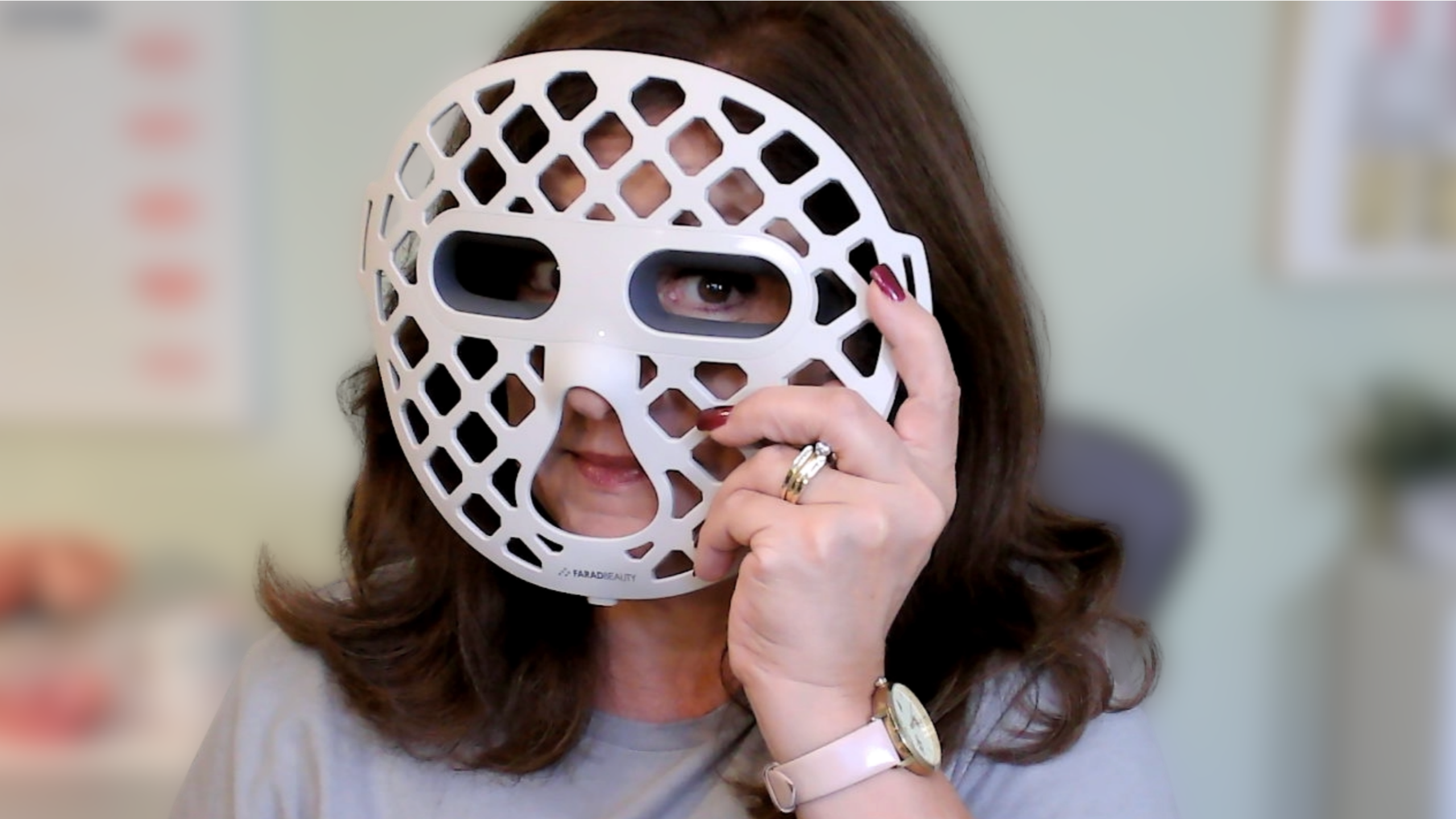
I'd like to give a shout-out to these brands for gifting me their LED light therapy devices: CurrentBody; Farad Beauty; Maysama; and Nooance. I am an affiliate for each of these brands. If you click a link in this blog and make a purchase, I may make a small commission. This in no way increases your cost and helps support my online business. Thank you!
🎥 Watch on YouTube
Did you remember to subscribe to Michelle Fox Beauty?
What Red Light Therapy Actually Does
Red and near-infrared light is absorbed by the mitochondria in your skin cells, the parts that produce energy. More cell energy is thought to support the cells that make collagen and elastin, the proteins that keep skin firm.
The benefits people talk about most are:
Softer-looking fine lines and wrinkles
Smoother texture
More even tone
Calmed redness
A more radiant look
But Does It Really Work?
This is the question I hear most, so let me answer it directly. The answer is yes, within limits.
Red light therapy has been studied for decades, and controlled trials have measured real changes in skin.
Here are a few examples:
Collagen, roughness, and complexion. In a randomized, controlled study of 136 volunteers, people who received red and near-infrared light twice a week for 30 sessions had significantly smoother skin, a measurable increase in collagen density, and improved skin feel and complexion compared with a control group (Wunsch and Matuschka, Photomedicine and Laser Surgery, 2014).
Wrinkles. In a 2023 randomized trial of 137 women ages 40 to 65, wrinkle volume around the eyes dropped by about 30% after 10 sessions over four weeks, using red or amber LED light (Mota and colleagues, Photobiomodulation, Photomedicine, and Laser Surgery).
Safety. A 2023 review of 57 studies in the Aesthetic Surgery Journal concluded that red and near-infrared light is oncologically safe for skin rejuvenation, meaning it found no evidence that it promotes skin cancer. Most of that evidence comes from lab and animal studies, so the reviewer notes more human research would help.
🙋🏻♀️ Now for the honest fine print, because I'd rather you hear it from me:
The results are real but modest. This is not a facelift.
The research is strongest for acne and wound healing. A review of 31 randomized trials of LED in dermatology (Jagdeo and colleagues, Lasers in Surgery and Medicine, 2018) gave its strongest recommendations to uses like those.
Devices and settings vary a lot between studies. That's one reason device quality and sticking to the recommended dose matter.
So where does that leave us? I think we've answered whether red light therapy is real. It does something measurable.
The question that's left is the one only you can answer...
The Real Question: Will You Commit?
Your body builds collagen slowly, so results come from repetition, not from any single session. In the studies above, people used light several times a week for weeks, not once. Here's what that looks like in real life:
3 to 5 sessions a week
6 to 10 minutes a session, depending on the device
About 12 weeks before you judge the results
➡️ LED light therapy is a gradual fix, not like a facelift or a peel. If you want fast, dramatic change, this isn't it. If you like the idea of a low-effort routine that adds up over a few months, keep reading.
My tip: take a photo on day one, then every week or two, in the same spot with the same light and no makeup. Slow changes are easy to miss in the mirror, and photos keep you honest and motivated.
How Red Light Therapy Became So Popular
It has a longer history than you might think:
1903: Niels Finsen won a Nobel Prize for using light to treat a skin infection, one of the earliest examples of light as a medical treatment.
1967: Hungarian physician Endre Mester was studying lasers on mice and noticed faster wound healing and hair regrowth. That discovery is credited as the start of what's now called photobiomodulation.
1990s: NASA researched red LEDs for growing plants in space, and the work expanded into wound healing. That research brought a lot of attention to LED light.
Today: treatments that once meant a trip to a dermatologist or med spa now come in masks you can wear on the couch.
One Difference Worth Knowing: Pulsed vs Continuous Light
Most LED devices shine a steady light. Pulsed devices switch the light on and off in rapid bursts. Of the devices in this post, Maysama is the only brand that features devices with pulsed red light.
Here's Maysama's case for pulsing:
The tiny pauses help your skincare absorb, keep skin cooler, and are gentler on pigment-prone skin.
Each pulse can reach a higher peak power than continuous light could sustain, while the total dose delivered to the skin stays the same. That's why Maysama's pulsed sessions are shorter: 6 minutes pulsed versus 9 minutes continuous on their masks.
Maysama's scientific team points to research suggesting pulsed light may penetrate more effectively through melanin-rich skin and may produce more cellular energy than continuous light at the same dose. Pulsed LED runs at much lower intensities than IPL (intense pulsed light) treatments and uses the pulsing to optimize how cells respond, not to generate heat.
📖 Read more about Maysama's claims about pulsed red light HERE.
A Heads Up About Freckles, Melasma, and Dark Spots
Before you buy anything, there's something I want you to know about, because I don't see many brands talk about it.
When I first tried LED light therapy years ago, my freckles seemed darker over time. I can't say for certain what caused it, and I don't see it as a knock on any one brand, because I've since learned that some people report darker pigment with LED devices in general.
So here's what we know about it...
What We Know
Red light is not UV light, so it doesn't cause the same kind of damage as the sun.
Darkening seems less common than improvement, but it does happen. Lab Muffin Beauty Science's review of the topic found that reports are mixed, with some people getting darker and others lighter, and that clinical data is limited, especially for deeper skin tones.
Nobody knows exactly why it happens. The theories include light boosting cell activity (including pigment production), irritation leaving dark marks behind, doses that are too high, and heat.
What May Help Lower Your Risk
I wish I could tell you there's one sure way to prevent it, but I couldn't find one.
These steps are the best supported:
Wear sunscreen every day. Sun is a well-established trigger for melasma, and strict UV protection is the foundation of melasma care. A broad-spectrum sunscreen with iron oxides (tinted ones) also helps block visible light, which researchers link to pigment in deeper skin tones.
Start low and slow. Try shorter or less frequent sessions at first, such as 5 minutes or twice a week, and build up. Stick to the recommended time, because more is not better.
Keep your skin calm. Irritation can leave dark marks, so go easy on harsh exfoliants and strong actives around your sessions. Use the device on clean, bare skin.
Skip the heat. Turn off any warming function, and notice if a device gets uncomfortably hot.
Try a different wavelength if your device allows it. Some people find one wavelength agrees with them more than another. Maysama suggests near-infrared only for deeper skin tones, but that's brand guidance, not a guarantee.
Choose a well-made device with clearly stated wavelengths and power, and a good return policy.
If you notice patches or freckles getting darker, stop, give your skin a few weeks to settle, and talk with a dermatologist before restarting, especially if you have melasma.
The Devices I'm Currently Using
Device | Price | Benefits |
|---|---|---|
Maysama Bian Stone Gua Sha | $69.95 | A 4-in-1 device that combines Gua Sha, LED light, gentle warmth, and vibration to create a relaxing, at-home skincare experience |
Maysama Urchin | $165 | A multi-benefit device with sonic cleansing and microcurrent modality, integrated with pulsed red LED light |
$335 | LED red light therapy for neck, chin, and chest | |
Maysama PRANA Mask | $375 | A full face LED routine with pulsed red light |
Nooance Elite X600 | $749 | The most light coverage you can get at home |
Maysama Bian Stone Gua Sha LED Facial Massager ($69.95)
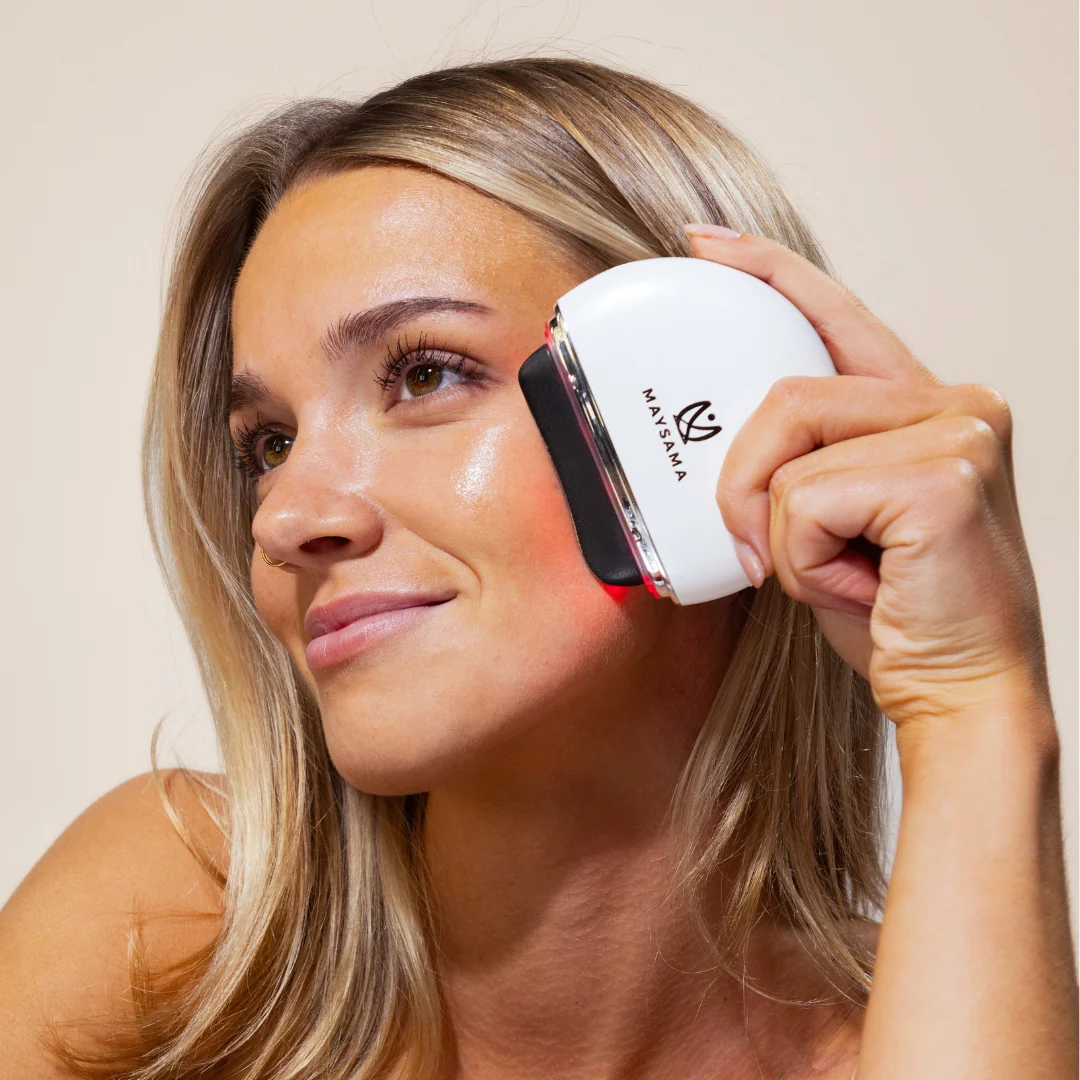
A low-cost way to try LED light, and the one that feels most like a self-care moment.
Combines a traditional gua sha massage with gentle warmth and vibration. Its light output is 8 mW/cm², far lower than the masks at 40 to 50, so think of it as a massage tool with light added, not a replacement for a mask.
I love how it helps my serums to absorb more fully while also providing lymphatic drainage.
Maysama suggests their Green Rooibos Bioferm Facial Oil for glide.
Gua Sha is a traditional massage technique that has long been used as part of beauty and self-care rituals. In modern skincare routines, Gua Sha–style massage is appreciated for its soothing, sculpting movements, helping to promote relaxation and leave the skin looking refreshed and revitalised. When used as part of a regular ritual, it can help ease the feeling of facial tension and support a smoother, more radiant-looking complexion.
Bian stone is a smooth, natural stone traditionally used in beauty tools and massage rituals. Chosen for its naturally cool feel and polished finish, Bian stone is valued in skincare routines for creating a soothing, comfortable massage experience across the face and neck. Its weight and texture allow for gentle, gliding movements that help enhance moments of relaxation and leave the skin feeling refreshed.
⚠️ About the heat function
Maysama doesn't recommend the heat function for deeper skin tones (Fitzpatrick types IV to VI, which generally means olive to deep brown skin that tans easily and rarely burns) because heat could trigger melasma. Experts aren't certain how much heat matters with a device like this, but it's one of the suspected triggers, and the heat can simply be turned off. So if you're prone to dark spots or melasma, I'd skip it. Maysama also doesn't recommend this device for dermatitis, eczema, damaged skin, or swelling. See my heads-up about freckles and dark spots above for more.
🛒 Shop the Gua Sha here 🛒 Shop the Bioferm Facial Oil here
Maysama Urchin Cleansing and Skin Rejuvenation Device ($165)
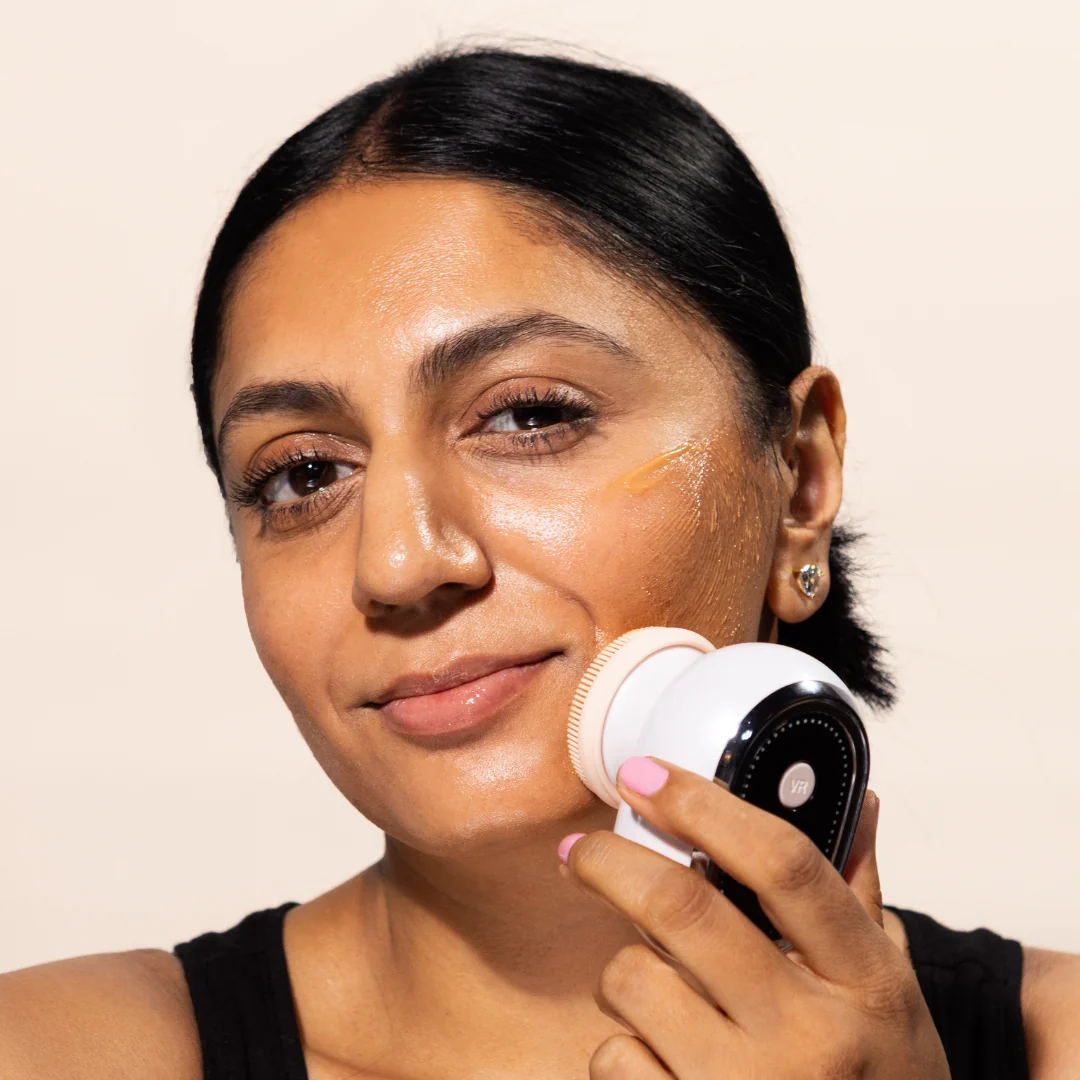
Replaces a cleansing brush and a microcurrent tool with one small device, which makes it a great first purchase.
Offers sonic cleansing (up to 6,000 vibrations a minute) and microcurrent (three levels) alongside 630 nm pulsed red light. Maysama lists the cleansing brush as suitable for normal skin types.
The red LED is pulsed. Maysama says pulsing is meant to help your skincare absorb better.
💫 This is my favorite LED device! So small and easy to use, and serves so many purposes.
Maysama suggests this be paired with Green Rooibos Gel-Balm Cleanser
What is microcurrent?
Microcurrent is a very low-level electrical current. Many people feel only a gentle tingle. It's often described as a workout for your face, because the current gently stimulates your facial muscles, and it's also thought to boost cell activity, including collagen.
➡️ It isn't new: microcurrent has been used in physical therapy since the 1970s for things like pain relief and facial paralysis, and in skincare it's used to help tone and lift. The Urchin's is 400 microamps with three intensity levels.
A few things to know:
The evidence is more limited than it is for red light. One randomized trial suggested fewer wrinkles, mostly on the forehead.
Results are cumulative, so regular use matters, and at-home devices are gentler than professional ones.
Who should skip it: anyone with a pacemaker or metal implants, open sores or severe acne, or who is pregnant or nursing. If you've had a lot of Botox, the upper face may not benefit. Check the Urchin's user manual for Maysama's own safety notes.
🛒 Shop the Urchin here 🛒 Shop Green Rooibos Cleanser here
Maysama PRANA LED Light Therapy Mask ($375)
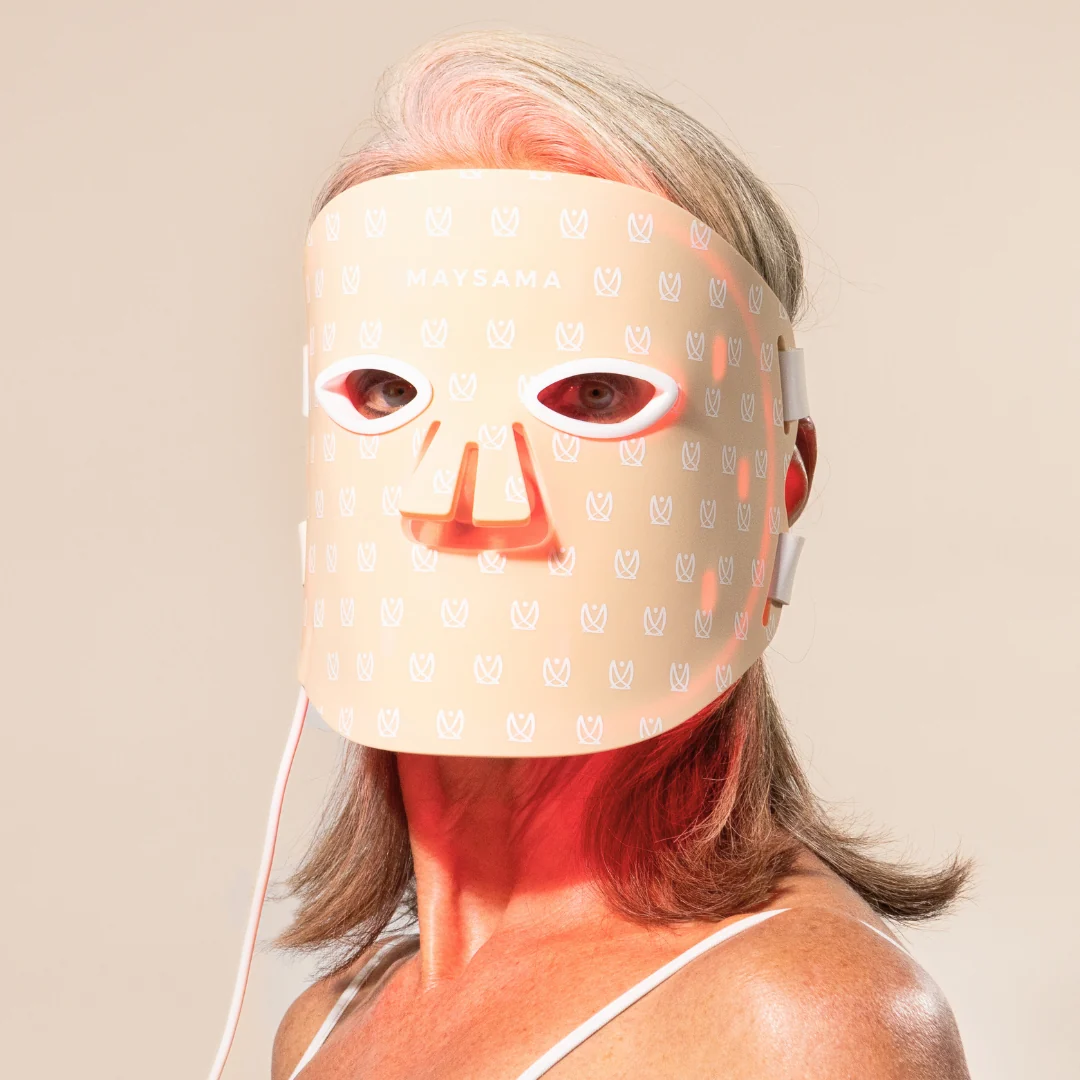
This full face mask has the most reviews in Maysama's lineup, rated 4.9 stars from 389 reviews on their site.
138 LEDs, four modes (red, near infrared, red plus near infrared, and magenta, which adds blue light for blemish-prone skin), pulsed light at 100Hz, and coverage that includes the lips. Maysama says it's FDA cleared and recommends 6 minutes, 3 to 5 times a week.
Not for anyone with light-triggered headaches or solar urticaria. Maysama recommends checking with a professional if you take medication that makes skin sensitive to light.
Pulsed light at 100Hz. Maysama says a pulsed session is 6 minutes, whereas continuous light needs 9.
This one has a cord, so if that is a problem, you may want to consider their newer AURA design. I just tuck the control into my pocket, so the cord hasn't been an issue.
Maysama reports independent lab testing where LED alone reduced the look of fine lines by 15.06% after 12 weeks, and by 19.76% when paired with Green Rooibos Pressed Serum.
🛒 Shop the PRANA Mask here 🛒 Shop the Pressed Serum here
Maysama PRANA Chin2Chest LED Light Therapy Device ($335)
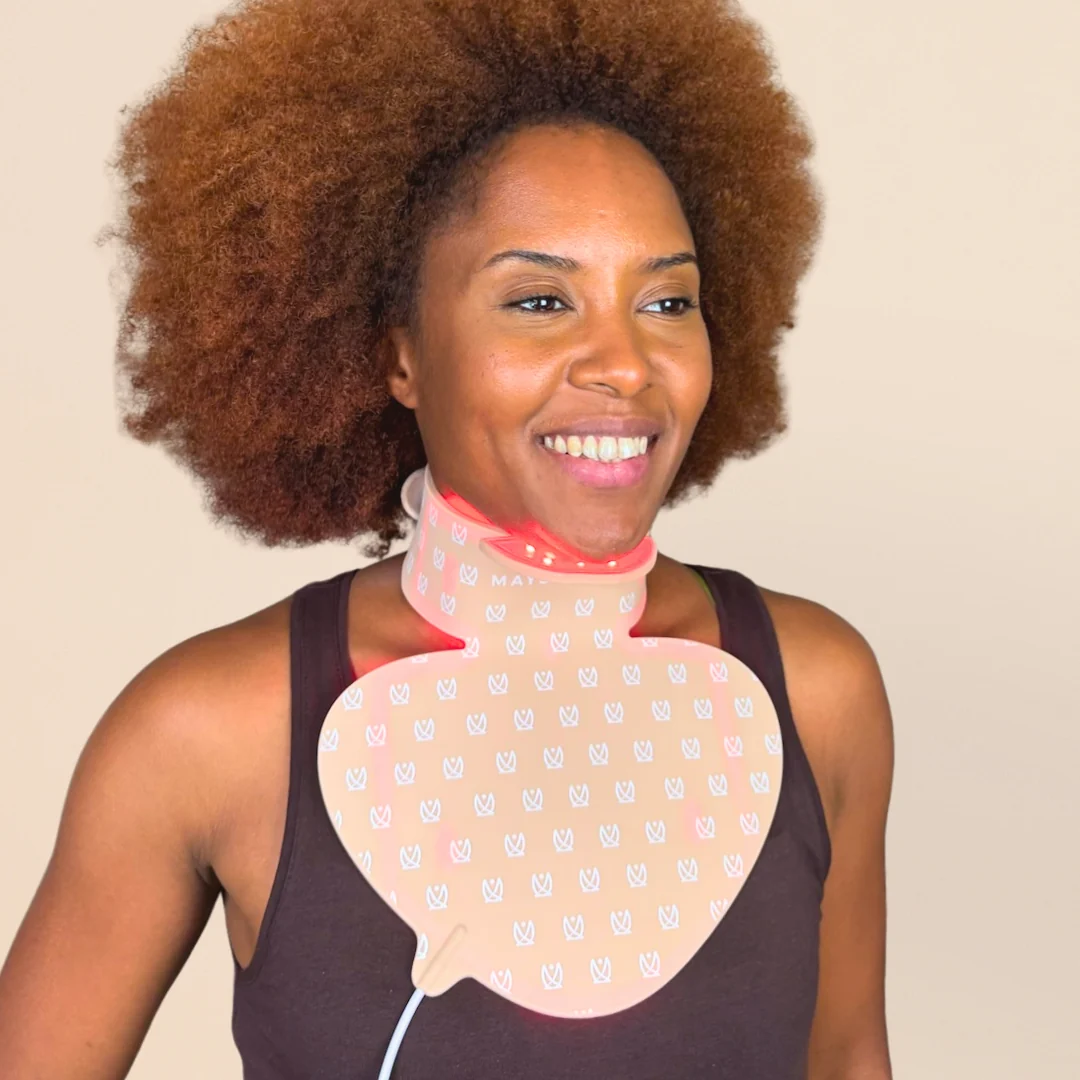
The neck and chest get skipped in most routines, and this device is built especially for that area!
An under-chin flap that Maysama says reaches an area most devices leave in shadow, plus 168 LEDs, pulsed light at 100Hz, and a wider neck band.
Same cautions as the PRANA mask: no solar urticaria or light-triggered migraines.
Pulsed light at 100Hz, same as the PRANA mask.
💫 This is so easy to use while I'm doing my nighttime skincare routine that I rarely forget it!
Pair it with the Green Rooibos AOX Hydrating Atomizer.
🛒 Shop the Chin2Chest here 🛒 Shop the AOX Hydrating Atomizer here
Spotlight of the Week: Nooance Elite X600 LED Mask
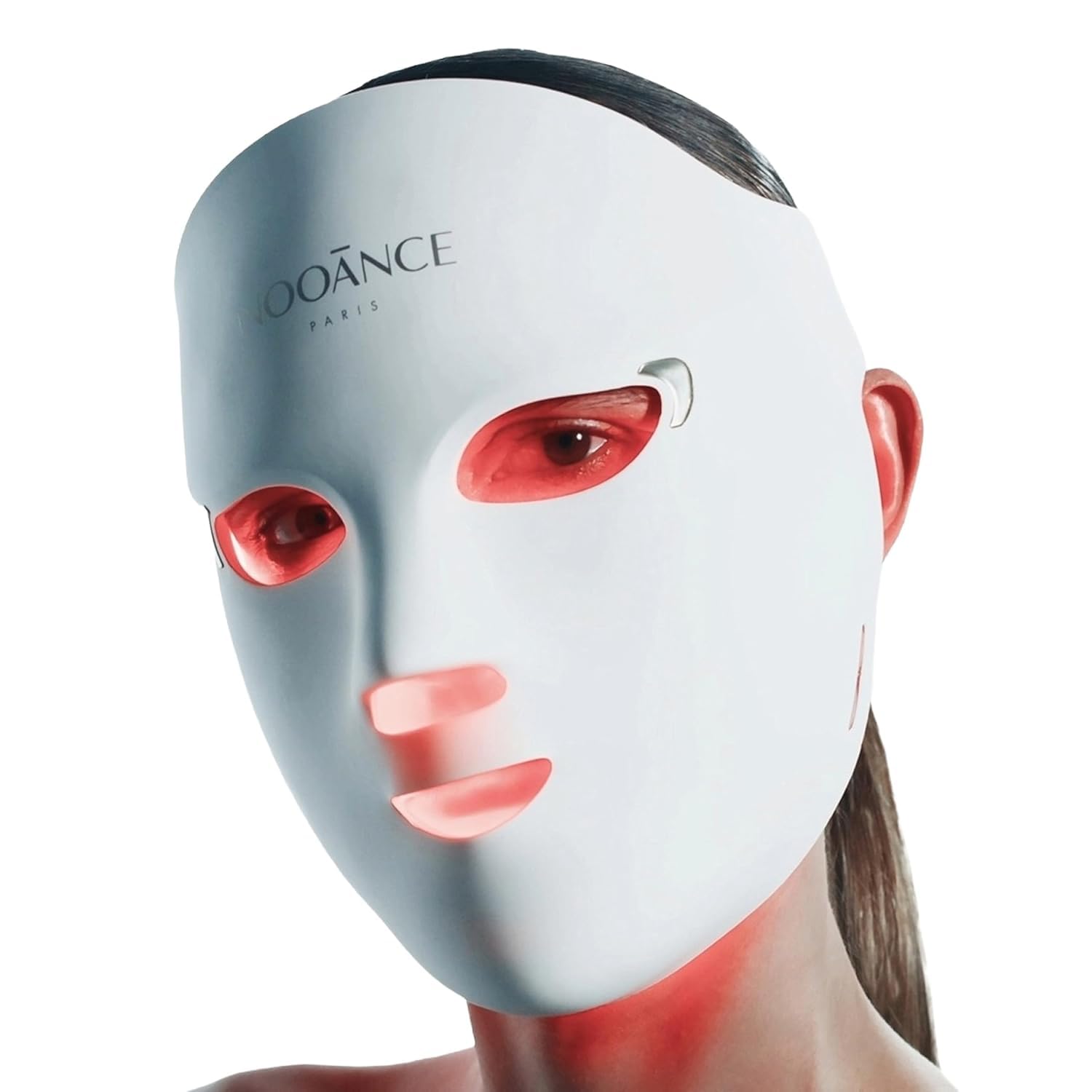
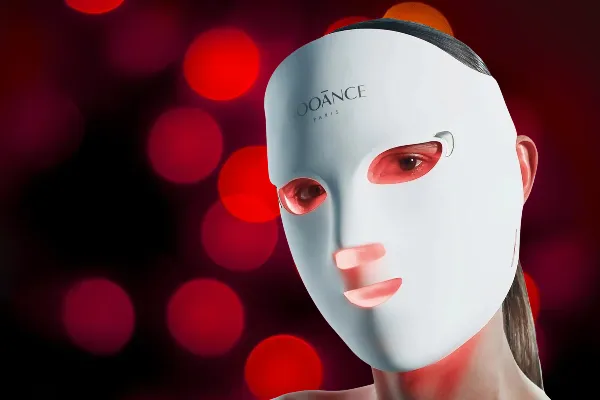
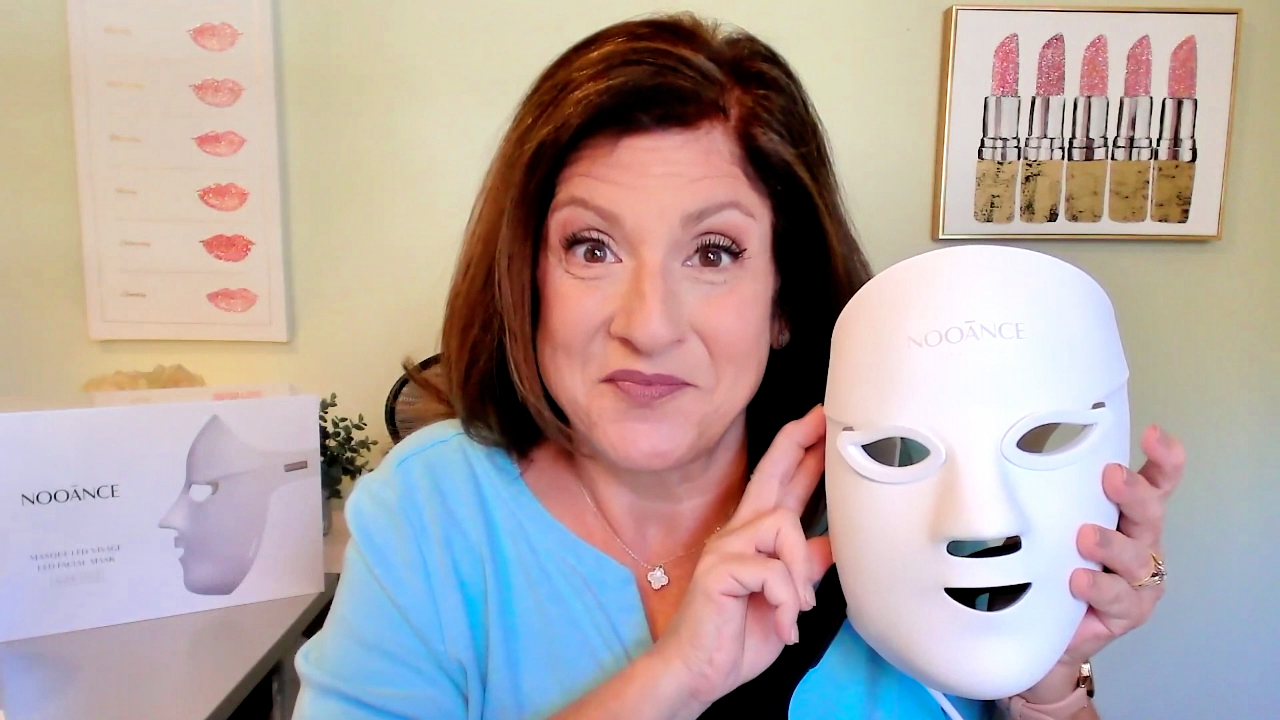
After using the Nooance Elite X600 for a couple of weeks, I am very impressed. The Elite X600 is the most expensive device in this post at $749, about twice the price of the PRANA mask. It's a French brand that has just become available in the US on Amazon. The reason for the price is light density: it has 600 LEDs, compared with 138 on the PRANA mask.
This full-face red and near-infrared mask is best for someone who wants the most thorough coverage possible at home.
300 red LEDs (633 nm) and 300 near-infrared LEDs (830 nm), a flexible 3D medical-grade silicone shape that follows the face and jawline, and light angled straight at the skin. Nooance lists 50 mW/cm² and 30 J/cm² delivered per session. It's continuous light, not pulsed, and it has a cord, so you're plugged in during a session.
The strength of 50 mW/cm² is close to the PRANA mask at 40 to 45. So the extra LEDs mean denser, more even coverage, not necessarily a stronger dose.
10-minute session, 3 to 5 times a week
This design hugs your face closely yet comfortably for a very thorough LED experience!
My Experience
Right out of the box, the extra touches that make this a premium product were evident. The quality of the straps, the comfort of the eye protection, the way it hugged every part of my face, including my chin, and yet was still comfortable, the simple design of the remote control, and yes, the number of LIGHTS!!! Wow! I cannot wait to see the results. Stay tuned...
🏅Accolades worth mentioning:
France's #1 LED mask
Marie Claire Prix d'Excellence de la Beauté prize winner 2026
Voted Best Advanced LED Mask by Harper's Bazaar 2026
Voted Best LED Face Mask for Reducing Redness by Good Housekeeping 2026
Awarded VIOLET CODE APPROVED by Violet Grey 2026
Used backstage at Cannes Film Festival
Chosen by Selena Gomez without a sponsorship deal
Backed by 5 independent clinical studies (not brand-funded) from GREDECO, France's leading dermatology lab
Here's how it compares with the AURA (cordless) and PRANA masks from Maysama:
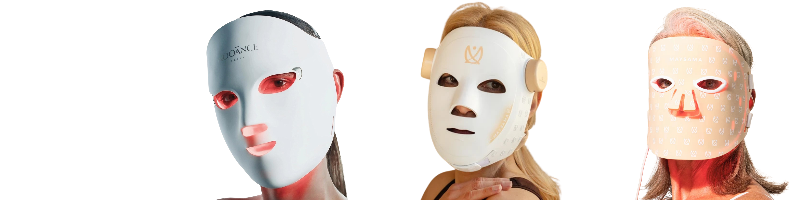
LEDs | 600 | 155 | 138 |
Wavelengths | Red 633 nm, near infrared 830 nm | Red 630 nm, near infrared 830 nm | Red 630 and 660 nm, near infrared 850 nm, blue 415 nm |
Light output | 50 mW/cm² | micropulse = 41 ± 5 mW/cm² continuous wave = 26 ± 5 mW/cm² | 40 to 45 mW/cm² |
Light type | Continuous | Intelligent Micro-Pulsing Technology | Pulsed at 100Hz |
Cord | Yes | No | Yes |
Price | $749 | $575 | $375 |
My 2 cents:
The extra cost of the Nooance Elite X600 may be worth it if you want one mask that covers every contour of your face evenly, you don't mind being plugged in, and you'll use it consistently.
If being cord-free is important, then the Maysama AURA may be more your style.
And if you want a great experience at the most affordable price, go for the Maysama PRANA (the one I've been using longest).
🛒 Shop the Nooance Elite X600 here
Let's Review
Is LED Light Therapy Right for You?
It may be a good fit if:
You want a gentle, low-downtime addition to your routine
You can commit to short sessions, 3 to 5 times a week, for about 12 weeks
Your concerns are fine lines, texture, dullness, or redness
Skip it or talk to your doctor first if:
You take medication that makes your skin sensitive to light
You get light-triggered headaches or migraines, or have solar urticaria
You have broken, irritated, or inflamed skin
You have melasma, or freckles and dark spots that darken easily (see my heads up above)
You expect fast, dramatic results
Which device fits which person?
Concerned about your neck and chest: the Chin2Chest or Neck2Dec
Ready to commit to a face routine: the PRANA mask
Prefer a cordless option: the AURA mask
Want the most coverage and have the budget: the Elite X600
My Bottom Line
Here's where I've landed after trying several of these devices: red light therapy is not just a trend, but it's not magic either. The research shows it does something real and measurable. It's modest, it's gradual, and it takes time.
So the question isn't really "does it work?" The question is "will I do it?" The best device for you is the one you will actually use 3 to 5 times a week for about 12 weeks, so be honest with yourself about your budget, your routine, and your skin.
If you're ready, here's what I'd do:
Pick a device that fits your budget and your life. A $70 gua sha you use beats a $749 mask in a drawer.
Set a 12-week goal, and take a photo on day one and every week or two after.
Protect your skin. Wear sunscreen daily, start with shorter sessions, and watch for darkening if your skin is pigment-prone.
Be patient. Skin changes slowly, and that's normal.
And if you're thinking about going all in, the Nooance Elite X600 has impressed me the most (but the Maysama Urchin is my favorite 🤩).
🛒 Shop Nooance (originated in Paris; now available on Amazon)
🛒 Shop Maysama (use promo code MFLED for 10% off)
🛒 Shop Farad Beauty (use promo code MF10 for 10% off)
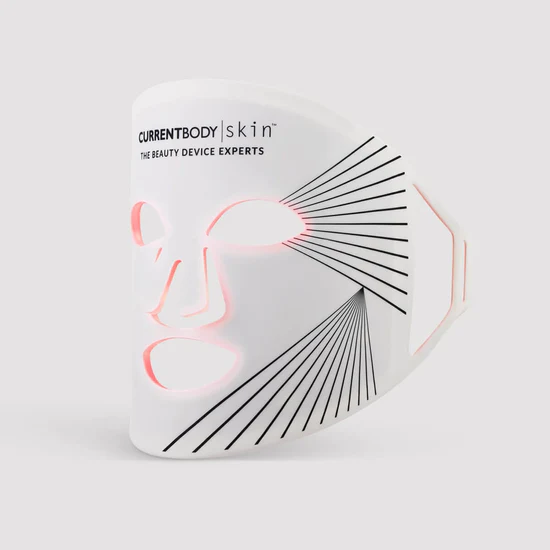
🛒 Shop CurrentBody (many consider this the original and the best)
Sources and further reading
Wunsch A, Matuschka K. A controlled trial of red and near-infrared light on skin roughness, wrinkles, and collagen density. Photomedicine and Laser Surgery, 2014. PubMed
Mota LR and colleagues. Photobiomodulation reduces periocular wrinkle volume by 30%: a randomized controlled trial. 2023. PubMed
Jagdeo J and colleagues. Light-emitting diodes in dermatology: a systematic review of randomized controlled trials. Lasers in Surgery and Medicine, 2018. PubMed
Photobiomodulation: a systematic review of the oncologic safety of low-level light therapy for aesthetic skin rejuvenation. Aesthetic Surgery Journal, 2023. Read it
Lab Muffin Beauty Science. Is red light safe for hyperpigmentation and melasma? Read it
Healthline. Microcurrent facial: how it works. Read it
Examine.com. Is red light therapy beneficial for skin health and appearance? Read it







Facebook
Instagram
LinkedIn
Youtube
TikTok
Pinterest