
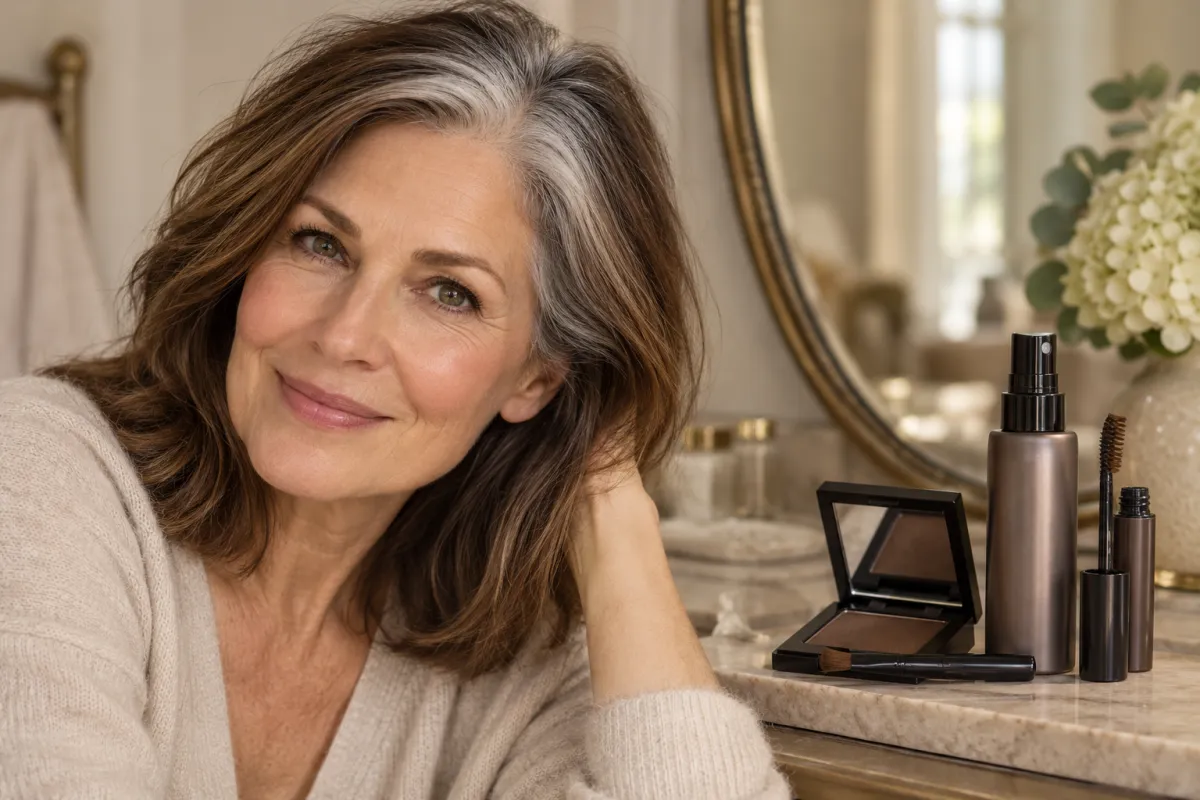
Gray Hair Transition Products and Root Cover Ups That Actually Work After 50
Going Gray or Covering Gray? A Practical Guide to Hair Color After 50 (Hair After 50, Part Two)
Are you ready to let your gray come in, or are you still coloring and just trying to make it to your next appointment?
Either answer is a good one, and this guide is built for both. Last week we talked about how our hair gets thinner and coarser as we age, and how that changes the styling products, treatments, and conditioners we need. If you missed it, you can read it HERE.
This week is part two, and it is all about gray. You will find my best tips for knowing if you are ready to "go gray", transitioning to gray, choosing the right method for your situation, and/or covering gray roots between appointments. That's a lot to cover, so let's jump in!
📹 Watch on YouTube
Did you remember to subscribe to Michelle Fox Beauty?
First, Which Path Are You On?
Before I can give you any tips or product recommendations, it helps to decide where you are headed. Most women fall into one of three groups, and it is completely fine to change your mind along the way.
Path 1: Growing out your gray cold turkey. You're ready to ditch the dye and completely stop coloring your hair. This takes patience, but with the right care and a few smart tricks, it can look polished the whole way through.
Path 2: Blending your gray gradually. You want your natural gray to show, but you want a softer transition. This is where your colorist can use highlights, lowlights, or a gloss to blur the line between your color and your gray.
Path 3: Covering your gray. You love your color and want to keep it. Your goal is to stretch the time between appointments and avoid that harsh line at the part.
And I cannot neglect to add that there are many of you who never chose to color your hair, and have been happy with your grays as they come in naturally. I have some helpful hints for you too.
Good to know: Hair grows roughly half an inch per month. For many women, that means a full gray transition takes a year or longer, depending on hair length. Knowing that upfront helps you plan and keeps you from getting discouraged around month three.
Part One: If You Are Transitioning to Gray (Paths 1 and 2)
Why Gray Hair Needs Different Care
If your gray seems different from the rest of your hair, you are not imagining it. Gray hair has not only lost its pigment; it often behaves differently from pigmented hair:
Drier. The scalp tends to produce less natural oil as we age, and that dryness shows up in our hair.
Coarse or wiry. The texture of gray hair often changes as the shape of the hair follicle changes.
Yellow. Gray hair can pick up a yellow or brassy tint from minerals in water, sun exposure, heat styling, smoke, and product buildup.
That is why your gray hair routine usually comes down to three goals: keep it moisturized, keep it from getting damaged, and keep it bright.
Let's start with keeping your hair bright and not brassy since it's one of the products you'll use first in your routine. Mind you, this is if you are wearing your hair gray or transitioning to gray, not if you are coloring your hair.
Purple Shampoos
Believe it or not, I had never heard of purple shampoo prior to needing one when I was growing out my natural gray. Crazy, I know. If you aren't familiar either, purple shampoo works because purple sits opposite yellow on the color wheel, so it cancels out the brassy tones that make gray and blonde hair look dull or yellowed.
Some of my favorites:
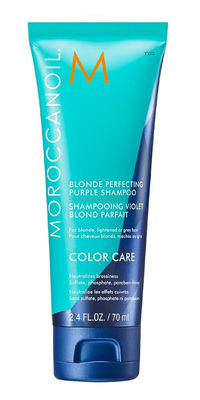
Moroccanoil Blonde Perfecting Purple Shampoo
I loved how bright and cool my gray looked after using this shampoo for blonde hair. Not only did my hair smell great, but it was also treated with Moroccan oil. My favorite purple shampoo!
🛒 Shop HERE
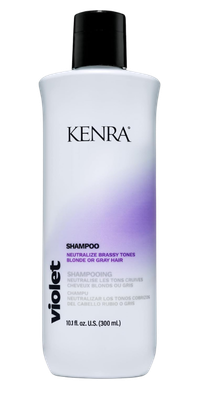
Kenra Violet Shampoo
My stylist always recommends Kenra products and this did work very well. It was actually the first purple shampoo I ever used and I learned quickly to wear gloves when applying it.
🛒 Shop HERE
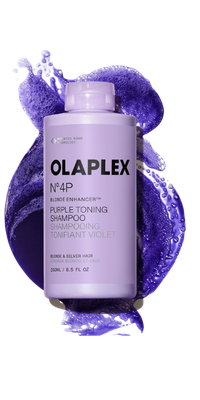
Olaplex No. 4 Blonde Enhancer Purple Toning Shampoo
I love and trust all things Olaplex. If you feel the same way, this is the purple shampoo for you. This product not only prevents hair from becoming brassy and yellow, it repairs, strengthens, and moisturizes your strands.
🛒 Shop HERE
How to use purple shampoo well:
Use gloves! Purple shampoo can stain your hands and fingernails.
Start with once a week and adjust from there. Some women need it less often.
Apply it to wet hair, work it through evenly, and leave it on for the time listed on the bottle. Leaving it on too long can leave a lavender tint on very light hair.
Always follow with conditioner, because purple shampoos can be drying.
If your hair starts to look dull or slightly gray-purple, take a break and use a clarifying shampoo.
Quick tip: If your yellowing keeps coming back quickly, look at the cause. Hard water minerals, chlorine, sun, and heat styling can all contribute. A shower filter and a heat protectant can make a visible difference.
Deep Conditioners and Masks
Coarse, thirsty gray hair benefits from a weekly deep conditioning treatment. This is where you put back the moisture and softness that gray strands tend to lose. These are specifically for gray hair.
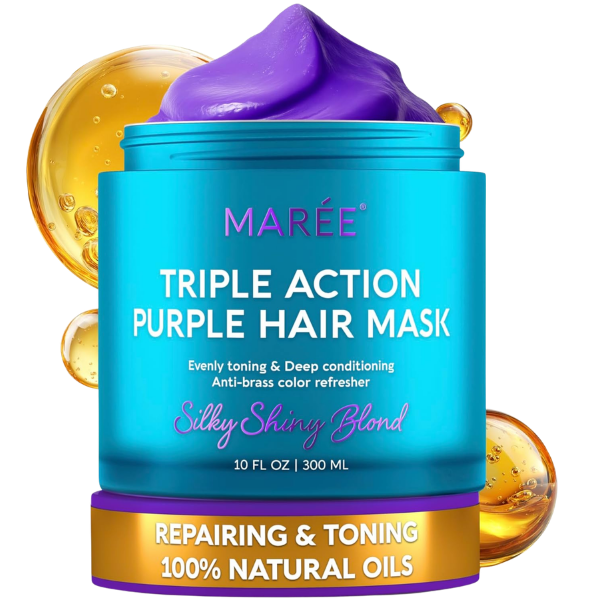
Maree Triple Action Purple Hair Mask
Amazon's best-selling deep conditioning mask for blonde and gray hair.
🛒 Shop HERE
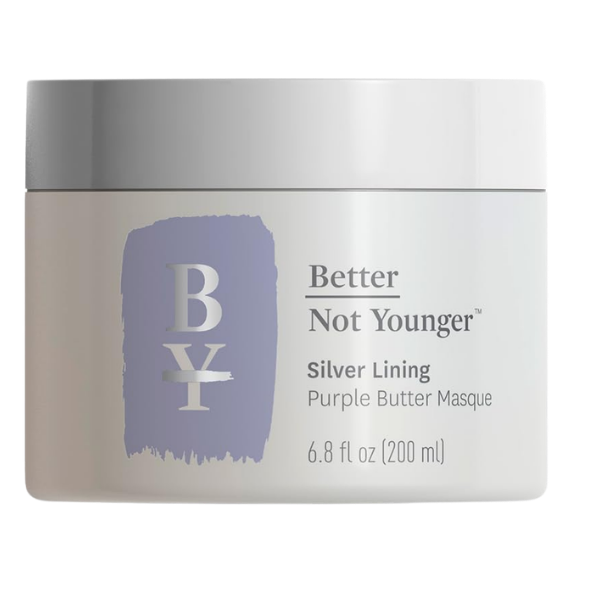
Better Not Younger Silver Lining Purple Butter Masque
A purple mask with mango, macadamia & avocado butters that deeply conditions gray and blonde hair.
🛒 Shop HERE
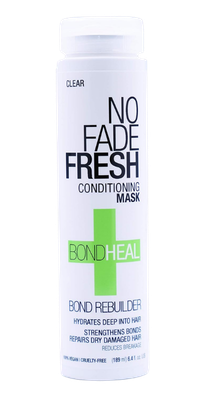
No Fade Fresh BondHeal Conditioning Mask
A deep conditioner and bond repair, all in one product.
Vegan
Cruelty Free/Not Tested on Animals
Sulfate Free
Phthalate Free
🛒 Shop HERE
Tips for better results:
Apply to damp hair, focusing on the mid-lengths and ends, where hair is driest.
Leave it on for the full time listed, and consider using a warm towel or shower cap to help it absorb.
If your hair is fine or thinning, use a lightweight mask so your hair does not get weighed down.
Other habits that protect gray hair:
Use a silk or satin pillowcase and microfiber hair towel to cut down on friction and frizz.
Always use a heat protectant before blow-drying or flat ironing. Heat can yellow gray hair.
Wear a hat or use a UV protectant on hair when you are outside for long periods.
Schedule regular trims. Split ends make gray hair look frizzy and unkempt.
Your Options for Making the Transition Look Intentional
If the idea of a wide stripe of gray at your part makes you nervous, you have options. Talk with your colorist about:
Highlights or babylights. Fine highlights mimic the look of natural gray and blend it into the rest of your hair.
Lowlights. These add depth so that the gray looks like part of a multidimensional color instead of a stripe.
A gloss or toner. A gloss can soften contrast and add shine to the gray that is coming in.
A new cut. Many women choose a shorter style during a transition because less length means a quicker transition. A cut with movement and shape can also make gray look styled instead of grown out.
Tip: Take photos of gray hair styles you love to your colorist. Gray looks different on everyone, and photos help a lot.
Part Two: If You Are Covering Your Gray Roots
If you color your hair, you know the feeling of spotting that gray line before your next appointment. Root cover-ups are a great bridge, but they are not all the same. Here is how the formats compare, and when each one makes sense.
Which Root Cover Up Should You Use?
Root Powder
Root powder may be best for quick fixes at the part and the hairline, and for fine hair that cannot handle heavy product.
They are available in a variety of formulas and also offer options with hair-like fibers that bulk up your hair while covering the gray.
➡️ Powders can make your hair look a little dry, so be careful not to use too much.
Some of my favorites:
ColorWow Root Cover Up - An award-winning, water-resistant, mess-free pressed powder applied with a brush. This is my choice for root powder.
Boldify Hairline Powder - A cream-to-powder formula applied with a sponge that provides 24-hour wear and instantly fills in sparse & thinning hair.
Toppik Hair Building Fibers - A loose powder that adds fibers to fill in fine or thinning hair as well as cover gray. It can be applied using the shaker lid or a spray applicator.
Root Spray
When I discovered root sprays, I did a happy dance! 💃🏻 They are so easy to use, cover a larger area, and look natural.
➡️ A word of advice: drape a towel over your clothing to protect it while applying the spray, and be careful not to spray your shower curtain or wall. Yes, I've done that. 😂
Some of my favorites:
Clairol Root Touch-Up Hair Coloring Spray - I was confused about the difference between this one and the one listed below, but I think this is used to cover a larger area when getting "lift" isn't as important.
Clairol Root Touch-Up 2-in-1 Color + Volume Spray - Everything the formula above does plus a root lifting effect. This one is more precise so it's perfect for your part.
Loreal Paris Magic Root Cover Up - Another favorite, but their medium brown is closer to black, so you may have to try a few before you find the right shade.
Root Mascara, Pens & Crayons
If you just need to cover a small area, a root mascara that you apply with a spoolie or a precision pen is just what you need.
And I also have to give a shout-out to the very first root cover-up I ever used, Tween Time - a crayon that you have to wet before applying. It may be old-school, but it lasts FOREVER!
Permanent and Semi-Permanent Root Touch-Up Color Kits
When you want to extend time between visits to the salon and the root sprays and powders aren't cutting it, consider coloring your hair at home with a root touch-up kit. It's easier than you think, and your stylist can help you select the shade that matches your hair color best.
Some of my favorites:
Clairol Root Touch Up Permanent Hair Dye - Simple instructions and amazing results!
L'Oréal Paris Magic Root Permanent Hair Color Kit - I especially love the color applicator for this kit. It's even easier than using a brush. Perfect for newbies.
General tips for any at-home root color:
Do a patch test first. If you are concerned about the color match, do not skip this step!
Read the full directions before you start. Application and timing can differ from kit to kit.
Protect your skin and clothes. Wear the gloves provided, an old shirt, and consider applying a barrier cream or a little balm along your hairline to prevent staining.
Start where gray is most stubborn. Many women find the hairline and temples resist color the most, so those areas often get applied first.
Stick to the roots. Avoid overlapping color onto the lengths of your hair, which can cause banding or a darker, drier look over time.
Set a timer. Leave the color on for the full time listed, and rinse thoroughly. (Hard-to-cover gray may require an extra 5 minutes.)
Follow with a conditioner or mask. Your hair will appreciate it.
When an at-home kit makes sense, and when to see a colorist:
An at-home kit works well when you are maintaining a shade you already have and need to cover regrowth.
Visit a colorist if you want a big color change, highlights or lowlights, a gray blending plan, or if your hair has been lightened or colored in several different shades.
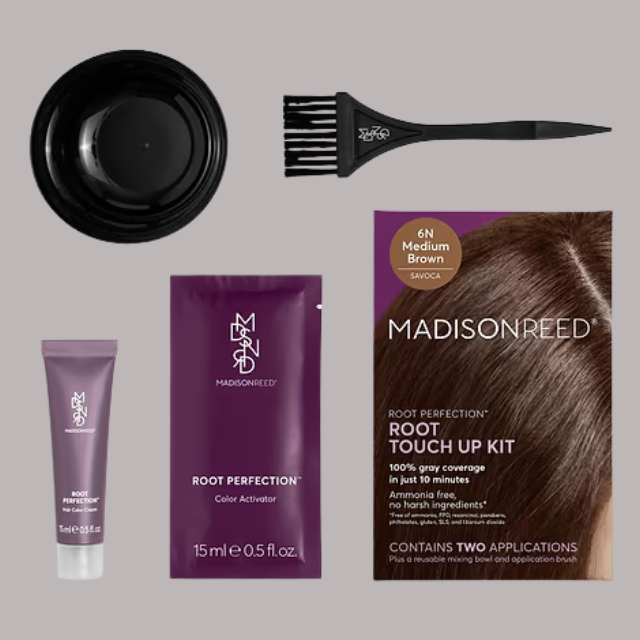
Product Spotlight: Madison Reed At Home Root Color Kit
Madison Reed offers salon-quality at-home hair color in formulas that are ammonia-free, PPD-free, cruelty-free, and dermatologist-tested. Known for its 100% gray coverage in 10-15 minutes and lack of harsh ingredients, this hair color kit has piqued my curiosity for years.
And I finally tried it for the very first time last week!
Watch the step-by-step process here:
My Take-Aways
This final result was the best I've ever experienced with an at-home kit!
The color match was amazing. My gray was completely covered. And my hair looked and felt glossy and healthy.
To say I loved it is an understatement!
Some bonuses that I really appreciated: the gloves in the kit are top-notch. No worries about them tearing during the process. And the applicator brush was very easy to control so I could keep the color exactly where I wanted it. The conditioning treatment that comes in the kit was unexpected but much appreciated!
Madison Reed Root Touch Up Kit currently costs between $25 and $35 compared to drugstore kits that are around $8 to $15, but keep in mind it comes with TWO applications, uses safe ingredients, and covers gray like no other!
Get more info and shop HERE
Final Thoughts
Whether you are growing your gray out, covering it up or doing a bit of both, the goal is the same: hair that looks healthy and feels like you. There is no wrong choice here, and you can change your mind as many times as you like.
I've created several lists to make shopping easiest for you. Best wishes on your journey, wherever it may lead.
👉 Shop Madison Reed
👉 Shop Amazon: Transitioning to Gray Hair; Covering Gray Roots
👉 ShopMy curated lists: Transitioning to Gray & Covering Gray Roots
Not sure if you're ready to grow out your gray? Take the quiz to find out!






Facebook
Instagram
LinkedIn
Youtube
TikTok
Pinterest