
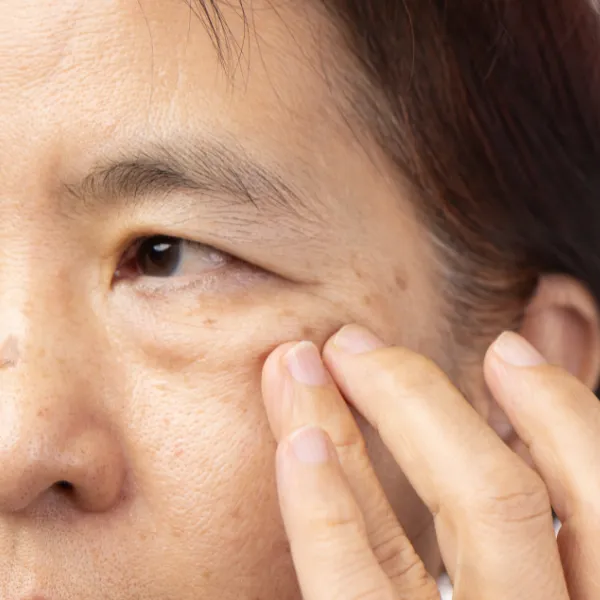
Age Spots - 3 Sure-Fire Ways to Lighten Them
Age Spots - 3 Sure-Fire Ways to Lighten Them
Those annoying age spots! You see a few here and there, and then all of a sudden... they're everywhere!
At some point, most of us have to deal with hyperpigmentation, excess melanin in our skin. The culprit is usually... you guessed it... the sun. But other factors, such as hormone shifts and medication, can play a role in creating dark patches as well.
So we know that we have them. The question is: how do we get rid of them?
In this week's episode, we're going to talk about 3 sure-fire ways to lighten age spots!
Here we go...
3 Sure-Fire Ways to Lighten Age Spots
So let's chat about this...
One of the questions I am asked often is how to get rid of the dark discolored skin on our faces. Sometimes they are age "spots", but often discoloration forms in patches or even a "halo" around the perimeter of our face (called pregnancy mask).
Today I am going to answer that question! So get excited, because you are about to learn the solutions to getting more even-toned skin again.
3 Main Things You Can Do About Dark Patches:
"Shed" them (deeply exfoliate)
"Treat" them (apply topical lightening creams)
"Hide" them (use quality makeup & application techniques)
Let's break each one down:
"Shed" them - Exfoliate
Our skin is made up of 3 layers:
the epidermis (top layer)
the dermis (middle layer)
and the hypodermis (bottom or fatty layer).
Melanin is located in the top layer, the epidermis, which fortunately can be treated to deep exfoliation, removal of dead skin cells, in many ways. This deep exfoliation is the first step in removing this excess pigmentation.
Types of Exfoliation
Exfoliation is available in several forms. Fortunately, many of these processes can be done in the convenience and privacy of your own home. Some are best administered by a professional. The most common methods are physical and chemical exfoliation.
Physical exfoliation, such as microdermabrasion treatments, can be done either at home or at a dermatologist's office. Consistent use of a microdermabrasion regimen will remove a significant amount of the discoloration simply by removing the dead skin from the outermost layers of your skin. Microdermabrasion can be administered up to 3 times per week, which make in-home options very appealing! Look for high-end brands with quality ingredients similar to what is used by dermatologists.
Chemical exfoliation goes deeper... literally. Active ingredients such as glycolic acid soak into the epidermis to exfoliate not only from the outside, but also from the inside out! Recent advancements has made products such as glycolic facial peels available for in home use as well as in the dermatologist's office, but be sure to read the instructions and take note of all of precautionary measures. This is a powerful ingredient!
Other deep exfoliation treatments include:
Cryotherapy - Liquid nitrogen is used to freeze the area; age spots lighten as the area heals. Although considered effective, it does have the possibility of scarring.
Intense Pulsed Light Treatment - This is better for light complexions and requires about 4 to 6 trips before results are seen; follow up appointments are required to maintain the benefits.
Laser Treatment - Results can be seen in just one or two treatments and are longer lasting than the results from creams or other treatments. However, there are side effects, such as crusting of the skin and temporary darkening of the area which you won't get with cream. (For best results, go to a dermatologist for laser treatment)
"Treat" them - Medicate
At one time, hydroquinone had a bad rap for creating a "halo" effect around treated areas, because it had to be applied very precisely, which was all-but impossible to do! However, skincare products have come a long way, baby! Hydroquinone no longer has to be applied only to the dark area. It is able to target age spots when applied all over the face.
Look for hydroquinone and other ingredients such as Vitamin C and Retinol when choosing a skin lightening product. These types of products are usually called Tone Correcting Serums or Creams when found over the counter. They can also be obtained at prescription strength from your doctor or dermatologist.
When purchasing on your own, check the expiration date! You want products with "active ingredients" to be fresh so they are as effective as possible. And again, take all instructions and precautions seriously.
"Hide" them - Makeup
And lastly, you can hide these spots while they are fading. You may be surprised at how well a quality foundation and concealer can cover and blend these areas to make them almost unnoticeable! If you do not have a foundation you love or think you "don't like" foundation, it's time to get some help!
Visit a makeup counter or see an experienced beauty consultant who can help you find the right undertone and formula, and you'll be pleasantly surprised at the options you have. One of my favorite recommendations to someone new to foundation is a BB or CC cream, which has a very lightweight feel to it.
Often times with a great foundation, you won't even need to add concealer! But when choosing a concealer, it should either match or be slightly lighter than your foundation.
To Wrap It Up...
When you put these 3 methods together, you will see a HUGE improvement in the overall look and tone of your skin and over time, you will be amazed at the continued improvement! Yes, you can get rid of age spots... or at the very least lighten them significantly!
Remember to take a great close up photo now so you can compare it to your glowing complexion in a few weeks! If you would like to share your results, feel free to come back and post them in the comments below!







Facebook
Instagram
LinkedIn
Youtube
TikTok
Pinterest